Table of content

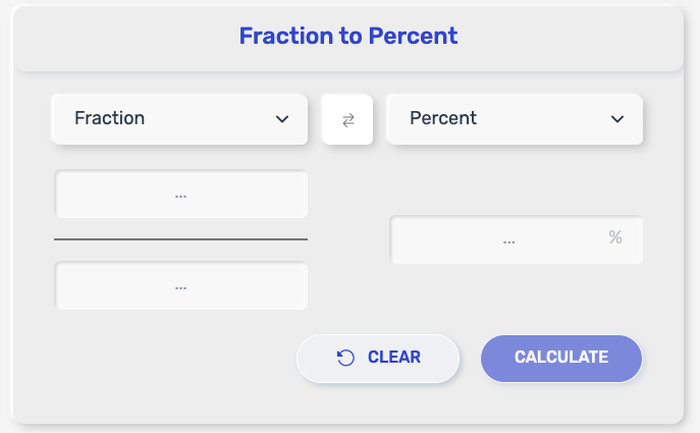
Use this fraction to percentage calculator to convert fraction to percent quickly and accurately. Enter any fraction, get the percent result instantly, and check simple examples, common conversions, and quick steps when you need to change a fraction into percent.
Use this fraction to percentage calculator to turn any fraction into a percent in just a few quick steps. It is a simple way to convert fraction to percentage without solving everything manually, and it works well for homework, reports, and everyday math.
Enter the numerator in the first input box.
Enter the denominator in the second input box.
Click the calculate button to run the fraction to percentage calculator.
View the result instantly as a percentage.
Check the answer to see how the fraction compares to a value out of 100.
Make sure the denominator is not zero before calculating.
Use the result to compare fractions to percents more easily and accurately.
This fraction to percent calculator helps you save time and avoid mistakes when you need a quick answer. Whether you are working with simple fractions or more detailed values, the tool makes fractions to percentages conversion fast and easy.
This fraction to percentage calculator can convert many common types of fractions, making it easy to change a fraction into percent for school, work, or everyday math. Whether the value is simple or more complex, the tool helps you convert fraction to percentage quickly and clearly.
Proper fractions
These are fractions where the numerator is smaller than the denominator, such as 1/2 or 3/4.
Improper fractions
These are fractions where the numerator is greater than the denominator, such as 5/4 or 9/7. The result can be more than 100%.
Equivalent fractions
Fractions like 1/2, 2/4, and 4/8 have the same value, so they convert to the same percentage.
Fractions with decimal results
Some fractions convert into decimal percentages, such as 1/8 = 12.5%.
Fractions with repeating decimals
Fractions like 1/3 or 2/3 create repeating decimals before converting into a percent.
Negative fractions
The tool can also convert negative fractions into negative percentages when needed.
This fraction to percent calculator makes fractions to percentages conversion faster and easier, so you can get a clear answer without working it out by hand.
When you use a fraction to percentage calculator, the answer shows how much the fraction represents out of 100. In other words, the tool takes the original fraction and expresses it as a percentage, which makes the value easier to read, compare, and understand.
In some cases, the result will be a clean whole number, such as 25% or 50%. In other cases, the fraction to percent calculator may return a decimal percentage, especially when the fraction does not divide evenly. This is normal and simply means the exact value includes more precision.
You may also notice that some fractions convert to percentages greater than 100%. That happens when the numerator is larger than the denominator, so the fraction itself is greater than one whole. For example, an improper fraction can convert fraction to percentage as a value above 100%.
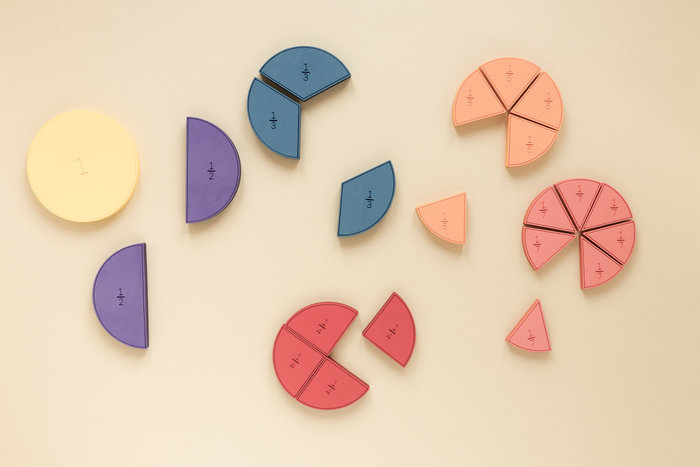
The fraction to percentage formula is simple and easy to apply. To convert fraction to percentage, divide the numerator by the denominator, then multiply the result by 100.
Percentage = (Numerator ÷ Denominator) × 100
This formula helps turn any fraction into a value out of 100, which is why it is commonly used in a fraction to percentage calculator. It works for proper fractions, improper fractions, and fractions that produce decimal results.
For example, if the fraction is 3/4, divide 3 by 4 to get 0.75. Then multiply 0.75 × 100 to get 75%. This is the same process a fraction to percent calculator uses to show the final answer quickly and accurately.
Sometimes you may want a quick answer without using a fraction to percent calculator. The process is simple and only takes a few steps.
Start by dividing the numerator by the denominator to turn the fraction into a decimal. For example, 3 ÷ 4 = 0.75. Once you have the decimal, multiply it by 100 to convert it into a percent. In this case, 0.75 × 100 = 75%.
If you prefer to see this process in action, the short video below walks through each step in a clear and visual way, which makes the conversion easier to follow.
If the decimal does not end cleanly, you can round the result at the very end. For instance, 1 ÷ 3 = 0.333..., which becomes 33.33% when rounded to two decimal places. It is better to avoid rounding too early, since that can slightly change the final value.
This quick method works for most fractions, whether they are simple like 1/2 or more complex like 7/8. It is also a useful way to double-check the result you get from a percent calculator when needed.
This common fraction to percent chart makes it easy to convert fraction to percentage at a glance. You can use it to compare fractions to percents quickly without entering each value into a fraction to percentage calculator.
|
Fraction |
Percent |
Fraction |
Percent |
|
1/2 |
50% |
1/8 |
12.5% |
|
1/3 |
33.33% |
3/8 |
37.5% |
|
2/3 |
66.67% |
5/8 |
62.5% |
|
1/4 |
25% |
7/8 |
87.5% |
|
3/4 |
75% |
1/10 |
10% |
|
1/5 |
20% |
3/5 |
60% |
|
2/5 |
40% |
4/5 |
80% |
This fraction to percent chart is helpful when you need a fast answer for schoolwork, reports, or everyday math. For fractions not listed here, a fraction to percentage calculator can give you the exact result in seconds.
When you convert fraction into percent, the steps are simple, but small mistakes can still lead to the wrong answer. Knowing the most common errors can help you get a more accurate result and better understand how a fraction to percentage calculator works.
Dividing the numbers in the wrong order
Some people divide the denominator by the numerator instead of dividing the numerator by the denominator. This gives the wrong decimal and leads to the wrong percentage.
Forgetting to multiply by 100
After dividing the fraction, you still need to multiply the decimal by 100 to convert fraction to percentage. Skipping this step leaves the answer in decimal form instead of percent form.
Adding the percent sign too early
The percent sign should only be added after the final value is found. Putting it in too soon can make the calculation confusing.
Mixing up proper and improper fractions
Some users expect every answer to be below 100%, but improper fractions can turn into percentages greater than 100%.
Rounding too soon
Rounding the decimal too early can change the final result. It is better to finish the full calculation first and round only at the end if needed.
Using a zero denominator
A fraction with a denominator of zero cannot be converted. This is not a valid math operation, so the calculator will not return a normal percentage.
Assuming equivalent fractions give different results
Fractions like 1/2 and 2/4 may look different, but they represent the same value and convert to the same percent.
Avoiding these common mistakes makes fractions to percents conversion much easier. Whether you solve it by hand or use a fraction to percent calculator, following the correct steps will help you get a clear and accurate answer.
Marecek, L., Anthony-Smith, M., and Mathis, A.H. (2020) – Prealgebra 2e, Section 6.1: Understand Percent
https://openstax.org/books/prealgebra-2e/pages/6-1-understand-percent
Khan Academy. (n.d.) – Converting Between Percents, Fractions, and Decimals
https://www.khanacademy.org/math/cc-sixth-grade-math/cc-6th-ratios-prop-topic/cc-6th-percent-word-problems/a/percents-fractions-and-decimals
Khan Academy. (n.d.) – Convert Fractions to Percents
https://www.khanacademy.org/math/arithmetic-home/arith-review-fractions/arithmetic-review-convert-fractions-to-decimals-and-percent/e/converting-fractions-to-percents
Math Is Fun. (n.d.) – Percents (%)
https://www.mathsisfun.com/percentage.html
Yes, this fraction to percentage calculator can convert improper fractions. If the numerator is larger than the denominator, the result will be more than 100%.
No, you do not need to simplify the fraction before using a fraction to percent calculator. The tool will still return the correct percentage, although simplified fractions can be easier to read.
Some fractions do not convert into whole numbers. In these cases, the fraction to percentage calculator shows a decimal percent to give a more accurate result.
Yes, a fraction can convert to more than 100% when it is an improper fraction. This happens when the numerator is greater than the denominator.
A fraction with a denominator of zero is not valid, so it cannot be converted into a percentage. The calculator will usually show an error instead of a result.
Converting fractions into percentages should feel simple, not frustrating. Fractiontopercent.com tool was created to help students, parents, teachers, and everyday users make quick, accurate conversions without getting stuck in extra steps. Whether you're studying math, checking homework, or working through everyday calculations, this tool is designed to make the process easier and more approachable.
This tool was built by the Fractiontopercent.com team, with contributions from developers, educational content creators, and calculator specialists who care about making useful math tools clear, practical, and easy for anyone to use.
We want this tool to be as easy to trust as it is to use.
Fractiontopercent.com does not ask for personal information or require registration. Any values entered are used only to generate results and are not stored or shared.
This tool is designed to provide accurate fraction-to-percent conversions based on the numbers you enter. Even so, results should be reviewed when used for schoolwork, reports, or other situations where precision matters.
The tool is made for learning, reference, and everyday calculations. It is meant to support understanding and save time, but it should not replace careful review when accuracy is especially important.
We may improve this tool and revise this Policy from time to time. Any updates will be posted here so the information remains clear and current.